
Alzamend Neuro Initiates Phase II Clinical Trial of AL001 "Lithium in Brain" Study in Patients with Bipolar Disorder in Collaboration with Massachusetts General Hospital
- Head-to-head studies of AL001 versus marketed lithium carbonate will compare lithium blood and brain/brain-structure pharmacokinetics in bipolar disorder type 1 patients
- Topline data expected in third quarter of 2026
- Topline data from the clinically completed "lithium in brain" imaging study in healthy subjects expected by the end of March 2026
ATLANTA, March 16, 2026 /PRNewswire/ -- Alzamend Neuro, Inc. (Nasdaq: ALZN) ("Alzamend"), a clinical-stage biopharmaceutical company focused on developing novel products for the treatment of Alzheimer's disease ("Alzheimer's"), bipolar disorder ("BD"), major depressive disorder ("MDD") and post-traumatic stress disorder ("PTSD"), today announced the initiation of its Phase II clinical trial evaluating AL001 in patients diagnosed with BD type 1. The trial is being conducted at Massachusetts General Hospital ("MGH") and represents a significant step toward advancement of AL001 as a potentially safer and more effective lithium-based therapy.
This Phase II study builds upon Alzamend's prior "Lithium in Brain" clinical trial in healthy subjects, for which the clinical portion was completed in November 2025. Topline data from that study are expected by the end of March 2026. Following completion in healthy volunteers, Alzamend and MGH are now expanding the program to subjects with BD type I, with plans to also initiate further trials in the near future in MDD, Alzheimer's and PTSD.
The study will utilize a crossover design intended for multiple six-subject cohorts. Following screening, participants are randomized into one of two treatment sequences: AB (AL001 followed by lithium carbonate) or BA (lithium carbonate followed by AL001). Each treatment period consists of 14 days of 3-times daily ("TID") dosing. A washout period of 14 days is planned between treatment periods.
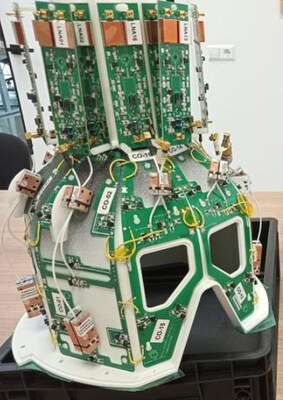
During days 14 and 15 of each treatment period, participants undergo intensive 24-hour lithium pharmacokinetic blood sampling in conjunction with advanced magnetic resonance imaging ("MRI") and magnetic resonance spectroscopy ("MRS") neuroimaging. The MRI and MRS neuroimaging methods were developed by the lab of Dr. Ovidiu Andronesi, the study's principal investigator, Associate Professor of Radiology at Harvard University and the Director of Multinuclear Metabolic Imaging, Martinos Center for Biomedical Imaging, Department of Radiology, MGH, Harvard Medical School. The study also incorporates a specialized, engineered head coil developed by Tesla Dynamic Coils BV, designed to enable high-resolution, whole-brain lithium imaging. This approach enables simultaneous quantification of lithium concentrations in blood and brain including individual structures, as well as assessment of brain and individual brain structure chemistry, metabolism, and biomarker effects.
The BD study specifically evaluates AL001's ability to enhance lithium delivery to targeted brain regions while reducing systemic exposure - an approach designed to address the long-standing safety and tolerability limitations associated with traditional lithium salts. Although lithium has remained the gold standard treatment for BD for more than 35 years, its clinical utility is constrained by a narrow therapeutic window and the need for regular therapeutic drug monitoring ("TDM") to mitigate risks of renal, thyroid, and other systemic toxicity.
In prior non-clinical studies, AL001 demonstrated higher lithium concentrations in brain tissue at lower doses compared to lithium carbonate. Alzamend's Phase IIA multiple-ascending dose study further evaluated safety and tolerability under steady-state conditions in patients with mild to moderate Alzheimer's and in healthy adult and elderly subjects with adequate renal function. AL001 was well tolerated across all dose levels, and the selected maximum tolerated dose ("MTD") for further development was determined based on maintaining plasma lithium levels below those associated in the medical literature with potential toxicity.
The MTD as assessed by an independent safety review committee, provided AL001's lithium at a lithium carbonate equivalent dose of 240 mg TID. This dose was selected to maintain plasma lithium concentrations below levels commonly associated with toxicity and is designed to be unlikely to require routine lithium TDM. Importantly, the selected MTD is risk-mitigated for use in fragile populations, including Alzheimer's patients.
Alzamend's goal is to find a way to get lithium into the right parts of the brain while keeping the amount in the rest of the body lower, which could reduce the risk of side effects. This approach is being studied for BD, MDDD, Alzheimer's and PTSD.
"The initiation of this Phase II trial in patients with BD marks a pivotal milestone for Alzamend," said Stephan Jackman, Chief Executive Officer of Alzamend. "Our goal with AL001 is to optimize brain lithium delivery while reducing systemic exposure and potentially eliminating the need for burdensome TDM. If successful, AL001 could meaningfully improve treatment outcomes for over 43 million Americans living with BD, other neuropsychiatric conditions, and neurodegenerative diseases."
About AL001
AL001 is a novel lithium-delivery system that has the potential to provide the benefits of marketed lithium salts while mitigating or avoiding currently experienced toxicities associated with lithium. Results from Alzamend's completed Phase IIA multiple-ascending dose study of AL001 in Alzheimer's patients and healthy subjects identified an MTD, as assessed by an independent safety review committee. This MTD is designed to be unlikely to require TDM while providing lithium at a relatively modest but effective dose. AL001 is designed to favorably distribute lithium in the brain resulting in lower exposure of other body organs and an improved safety profile compared to currently marketed lithium salts. This can serve to mitigate or obviate the disadvantageously low ceiling for toxicity of marketed lithium salts that has limited their usefulness to patients and prescribers.
About Alzamend Neuro
Alzamend Neuro is a clinical-stage biopharmaceutical company focused on developing novel products for the treatment of Alzheimer's, BD, MDD and PTSD. Our mission is to rapidly develop and market safe and effective treatments. Our current pipeline consists of two novel therapeutic drug candidates, AL001 - a patented ionic cocrystal technology delivering lithium via a therapeutic combination of lithium, salicylate and L-proline, and ALZN002 - a patented method using a mutant-peptide sensitized cell as a cell-based therapeutic vaccine that seeks to restore the ability of a patient's immunological system to combat Alzheimer's by removing beta-amyloid from the brain. The latter is a second-generation active-immunity approach designed to mitigate the disadvantages of approved passive immunity marketed antibody products, particularly by reducing the required frequency and costs of dosing associated with antibody products. Both of our product candidates are licensed from the University of South Florida Research Foundation, Inc. pursuant to royalty-bearing exclusive worldwide licenses.
Forward-Looking Statements
This press release contains "forward-looking statements" within the meaning of Section 27A of the Securities Act of 1933, as amended, and Section 21E of the Securities Exchange Act of 1934, as amended. These forward-looking statements generally include statements that are predictive in nature and depend upon or refer to future events or conditions, and include words such as "believes," "plans," "anticipates," "projects," "estimates," "expects," "intends," "strategy," "future," "opportunity," "may," "will," "should," "could," "potential," or similar expressions. Statements that are not historical facts are forward-looking statements. Forward-looking statements are based on current beliefs and assumptions that are subject to risks and uncertainties. Forward-looking statements speak only as of the date they are made, and Alzamend undertakes no obligation to update any of them publicly in light of new information or future events. Actual results could differ materially from those contained in any forward-looking statement as a result of various factors. More information, including potential risk factors, that could affect Alzamend's business and financial results are included in Alzamend's filings with the U.S. Securities and Exchange Commission. All filings are available at www.sec.gov and on Alzamend's website at https://www.Alzamend.com.


 View original content to download multimedia:https://www.prnewswire.com/news-releases/alzamend-neuro-initiates-phase-ii-clinical-trial-of-al001-lithium-in-brain-study-in-patients-with-bipolar-disorder-in-collaboration-with-massachusetts-general-hospital-302714440.html
SOURCE Alzamend Neuro, Inc.
Released March 16, 2026
